+86 133 0307 8975
+86 133 0307 8975
Jan. 09, 2026
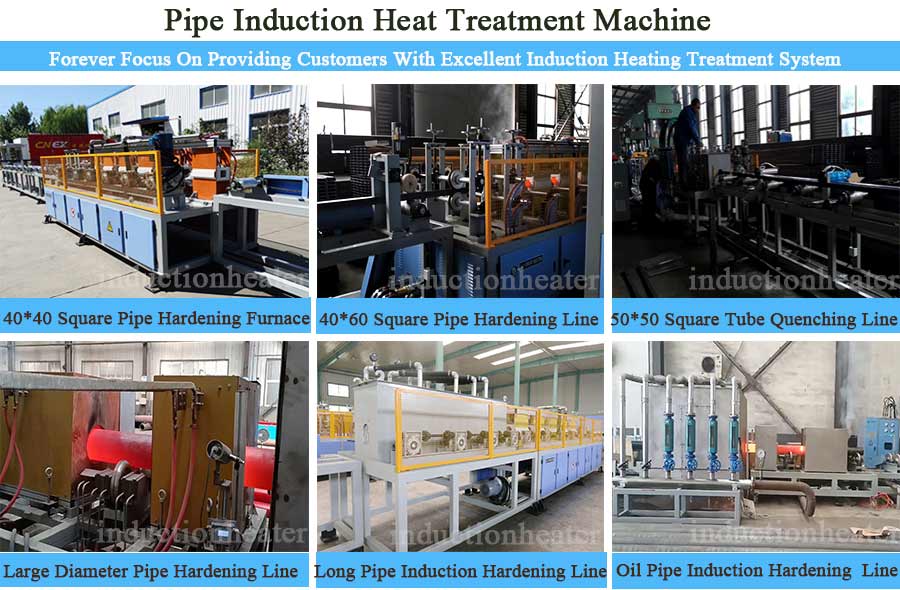
In heat treatment processes such as steel pipe induction hardening and tempering equipment, the energy consumption level directly determines the production cost. Different types of heating methods have significant differences in energy consumption structure and efficiency. By comparing traditional gas heating with medium frequency induction heating, it is clear where the energy-saving potential lies.
1. Energy consumption composition
The energy consumption of steel pipe heat treatment is mainly divided into three parts:
Heating energy consumption: accounting for a large proportion, used to heat steel pipes to the required temperature for quenching or tempering;
Cooling and water treatment energy consumption: mainly refers to the power consumption of water pumps and circulating water systems;
Auxiliary energy consumption: energy consumption of transportation, control, and detection systems.
In traditional gas stoves, heating energy consumption accounts for over 70% of total energy consumption, while pipe induction hardening and tempering furnace induction heating relies more on electrical energy conversion efficiency.
2. Energy consumption difference between gas heating and induction heating
Gas heating: The thermal efficiency is usually between 30% and 45%, and a large amount of heat is lost in the furnace lining and flue gas. At the same time, additional dust removal and exhaust treatment are required, resulting in high indirect energy consumption.
Induction heating: Electric energy is directly converted into heat inside the workpiece, with an electric thermal conversion efficiency of up to 70% -80%. The heating is uniform and the heating rate is fast, reducing energy waste.
Under the same production conditions, the energy consumption per ton of steel for induction heating is often 15% -25% lower than that of gas heating.

3. Design of energy-saving measures
Power configuration: Adopting a series power supply, the power factor can reach 0.9 or above, reducing reactive power loss;
Closed loop water system: realizing the recycling of water resources and reducing the long-term high load operation of water pumps;
Intelligent control: Optimize parameters through PLC and process database to avoid ineffective energy consumption caused by overheating insulation;
Heat utilization design: In some factories, induction heating combined with waste heat recovery devices can further reduce overall energy consumption.
4. Engineering Practice
In the steel pipe Φ 114-219mm quenching and tempering line project, Forever controls the electricity consumption per ton of steel within 320-360 kWh through the combination of multiple power sources and the design of a closed circulating water station; The comprehensive energy consumption per ton of steel in traditional gas technology is between 420-480 kWh. Calculated based on an annual output of 60000 tons, it can save nearly one million yuan in electricity or comprehensive energy costs each year.
5. User Value
Cost reduction: Reducing energy consumption directly lowers the production cost per ton of steel;
Environmental compliance: Induction heating has no smoke and dust emissions, avoiding environmental investment;
Stable operation: Energy saving design not only saves electricity, but also reduces equipment failure rate and maintenance costs.
The energy consumption comparison of steel pipe induction hardening and tempering furnaces shows that induction heating not only has higher efficiency, but also conforms to the development direction of energy conservation and environmental protection. Through application verification in multiple projects, Yuantuo can provide customized energy-saving solutions for users, truly transforming energy consumption levels into competitive advantages.
If you are also interested in this machine,please don't hesitate to contact us:
Overseas manager: Tom Wang
Email:tom@foreverfurnace.com
Phone/Wechat/Whatsapp:+86 13303078975
Navigation
Tel.:+86 133 0307 8975
E-mail: tom@foreverfurnace.com
WhatsApp: +86 133 0307 8975
Add.: Wuqiao Economic Development Zone, Hebei Province, China, Cangzhou, Hebei, China
FOLLOW US